Super Bowl Draws 124.9M Viewers; Bad Bunny Hits 128.2M
February 12, 2026

February 10, 2026
February 8, 2026

February 6, 2026

Lester Franklin, a sports journalist covering global football, major leagues, player transfers, match analysis, and the business of sports.
This year’s Super Bowl delivered another massive television audience, but neither the game nor its halftime show managed to break all-time viewing records.
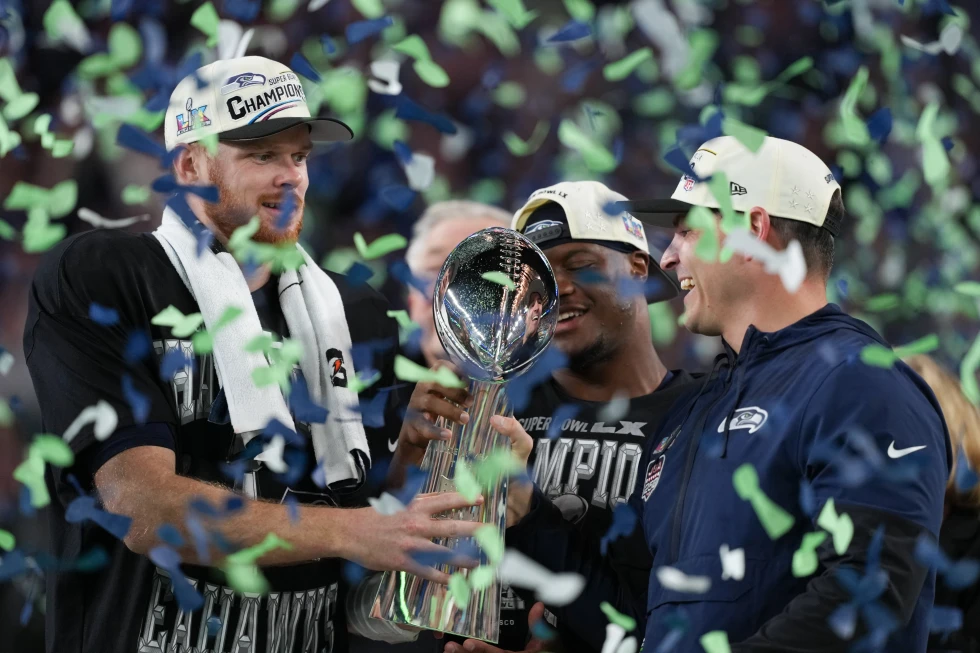
According to Nielsen’s Big Data + Panel rating system, Sunday night’s matchup between the Seattle Seahawks and the New England Patriots averaged 124.9 million viewers across NBC, Peacock, Telemundo, NBC Sports Digital, and NFL+. While that number represents one of the largest audiences in television history, it fell just short of last year’s record-setting Super Bowl, which drew 127.7 million viewers on Fox when Philadelphia defeated Kansas City.
Still, the broadcast marked a milestone for NBC. The network, which is celebrating its 100th anniversary this year, announced that Super Bowl 60 was officially the most-watched program in its history.
Bad Bunny’s Halftime Show Comes Close — But Not Close Enough
Bad Bunny’s long-awaited halftime performance likewise drew massive ratings, with the figure averaging 128.2 million viewers between 8:15 and 8:30 p.m. EST. This makes Bad Bunny’s performance the fourth highest-rated halftime performance, but it was not enough for the rapper to reach the top.
These figures remain current for Kendrick Lamar’s half-time event in 2025, which recorded 133.5 million viewers. Michael Jackson’s legendary event in 1993 is the next closest with 133.4 million viewers. Usher’s half-time event of 2024 ranks next with 129.3 million viewers.
Although it can be argued that Bad Bunny might not establish his own benchmark, it can be said that his show definitely achieved extensive media coverage and high engagement, especially through digital media, which speaks volumes about his fan base and his popularity globally.
Peak Audience Hits New High
One major record did fall on Sunday night.
The game’s audience peaked at 137.8 million viewers during the second quarter, between 7:45 and 8 p.m. Eastern — the highest peak audience ever recorded for a U.S. broadcast. That narrowly surpassed last year’s peak of 137.7 million viewers.
Despite the strong showing, this year’s Super Bowl broke a four-year streak of annual audience growth. However, it continued an impressive trend: the fifth consecutive Super Bowl to average more than 100 million viewers.
A Less Thrilling Game Impacts Viewership
One factor that may have contributed to the slight dip in overall audience was the nature of the game itself.
After three straight Super Bowls that went down to the final moments, the last two championship games have lacked late-game drama. Sunday’s contest was largely one-sided, with Seattle taking a 12-0 lead into the fourth quarter and ultimately winning 29-13.
It was only the second Super Bowl in history in which no touchdowns were scored through the first three quarters. Last year’s game was similarly lopsided, as Philadelphia built a commanding 24-0 halftime lead on the way to an easy victory.
Without the nail-biting finishes that often keep casual viewers glued to their screens, the overall audience understandably slipped a bit.
Alternative Halftime Show Gains Online Attention
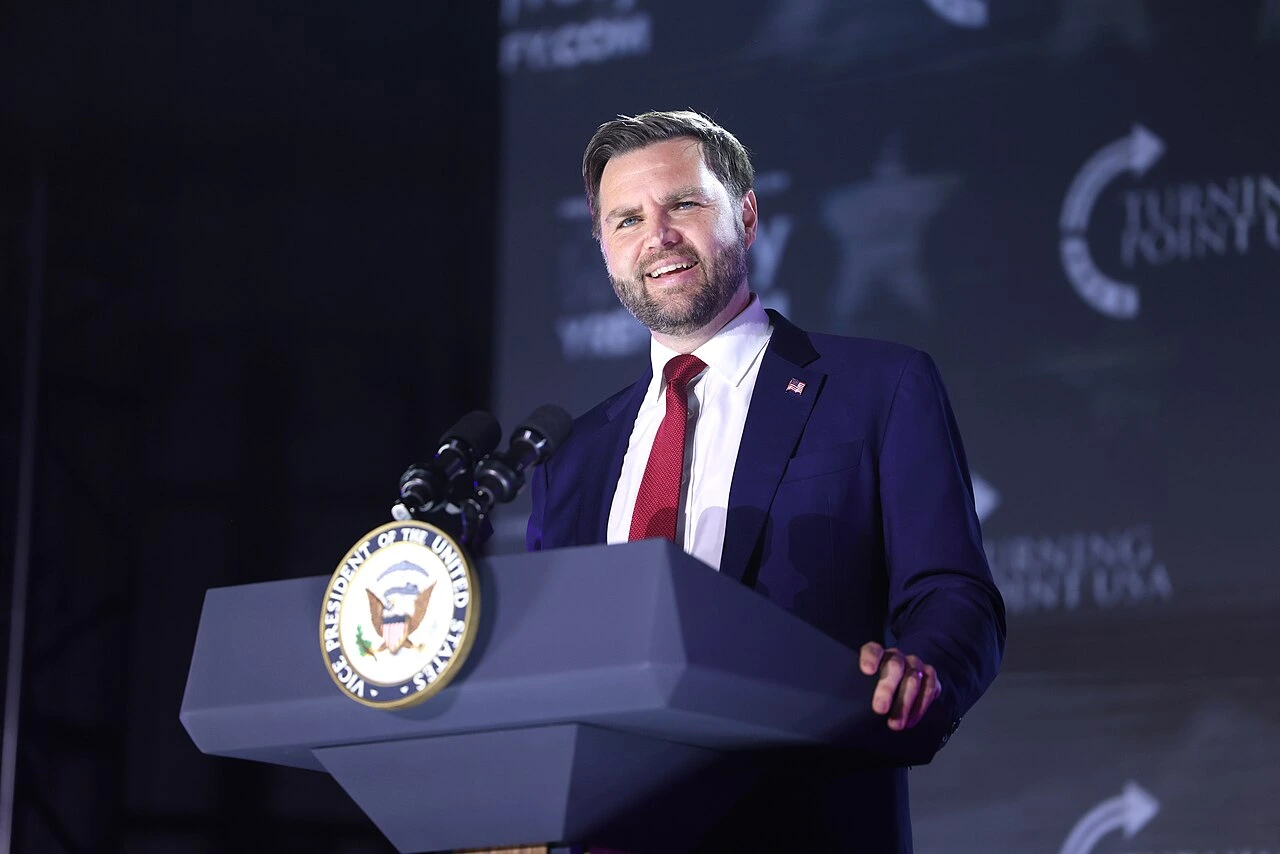
While Bad Bunny dominated the official halftime stage, a competing event hosted by conservative group Turning Point USA also drew attention online.
The organization’s YouTube-streamed halftime show featuring Kid Rock reportedly peaked at 5 million concurrent viewers on the platform. Nielsen did not measure YouTube streaming figures, but Turning Point USA claims the event has since generated more than 21 million total views.
By comparison, Bad Bunny’s halftime performance has already racked up more than 61 million views on YouTube, highlighting the stark difference in reach between the two shows.
Record-Breaking Social Media Engagement
Beyond traditional television ratings, Bad Bunny’s halftime performance made an enormous splash on social media. According to data from the NFL and Ripple Analytics, clips and posts related to the show generated a staggering 4 billion views within the first 24 hours — a 137% increase over last year’s halftime performance.
More than 55% of those social media views came from international audiences, reflecting the Puerto Rican superstar’s global fan base and the worldwide appeal of the Super Bowl spectacle.
Spanish-Language Broadcast Sets New Marks
Telemundo also had a big night, averaging 3.3 million viewers — making it the most-watched Spanish-language Super Bowl broadcast in U.S. history.
The audience for the Spanish telecast peaked at 4.8 million during halftime, another record for Spanish-language Super Bowl coverage. The game has been offered in Spanish in the U.S. since 2014, and viewership has steadily grown ever since.
Super Bowl Boosts Winter Olympics Coverage
The network’s “Primetime in Milan” broadcast, featuring Winter Olympics events such as women’s downhill skiing and team figure skating, averaged 42 million viewers. That made it NBC’s most-watched Winter Olympics program since the 2014 Sochi Games and marked a 73% increase over the Olympic show that followed Super Bowl 56.
“The Super Bowl and the Olympics are the two most powerful events in the world,” NBC Sports President Rick Cordella said in a statement. “We salute our talented production teams who delivered best-in-class presentations for our viewers.”
Strong Year Overall for the NFL
The Super Bowl capped off another dominant season for the NFL. Playoff games averaged 37 million viewers over the first three weekends, up 5% from last year and the second-highest total of the past decade.
The regular season was equally strong, averaging 18.7 million viewers per game — the second-highest mark since audience tracking began in 1988 and a 10% increase over the previous season.
While this year’s Super Bowl didn’t rewrite the record books, it once again proved that America’s biggest sporting event remains an unrivaled television powerhouse.

Lester Franklin, a sports journalist covering global football, major leagues, player transfers, match analysis, and the business of sports.
February 12, 2026
February 10, 2026
February 8, 2026
February 6, 2026