Ilia Malinin Leads U.S. to Gold in Figure Skating Team Event
February 12, 2026
February 11, 2026

February 10, 2026

February 6, 2026


Lester Franklin, a sports journalist covering global football, major leagues, player transfers, match analysis, and the business of sports.
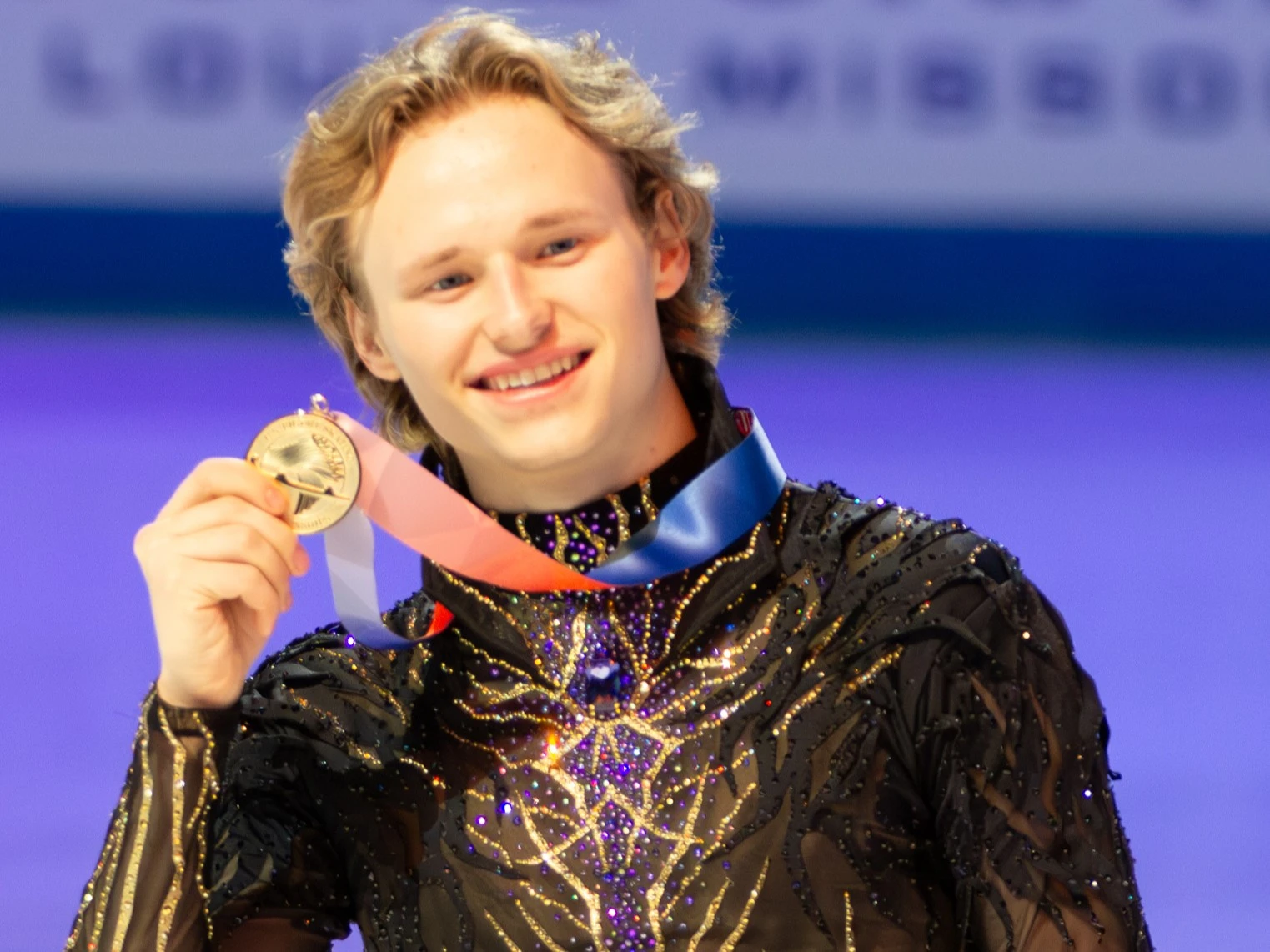
It was the kind of moment that makes the Olympics unforgettable. With the U.S. and Japan tied after seven of eight events in the figure skating team competition at the Milan Cortina Winter Games, all eyes turned to one skater: 21-year-old Ilia Malinin. And Malinin, nicknamed the “Quad God” for his unmatched ability to land quadruple jumps, delivered a performance that will be remembered for years.
Malinin’s Spectacular Performance
He opened his free skate with a soaring quad flip, navigated a safer triple axel instead of a riskier quad, and even after a few minor errors, closed with back-to-back combinations—a quad toe-triple flip and a quad salchow-triple axel—that left the crowd roaring. His total of 200.03 points was enough to outpace Japan’s Shun Sato, who landed a trio of quads himself but scored 194.86.
“I was like, ‘OK, I’m the deciding factor,’” Malinin said after the medal ceremony. “I need to just do what I need to do.” For the son of former Olympians Tatiana Malinina and Roman Skorniakov, it was a moment of redemption. In Beijing, his team had to wait more than two years for their awards because of Russian doping sanctions. This time, the celebration was immediate.
U.S. Secures Back-to-Back Golds
The U.S. finished the team event with 69 points to Japan’s 68, earning gold for the second consecutive Winter Games. Italy, buoyed by a brilliant free skate from Matteo Rizzo, took bronze with 60 points, while Georgia finished fourth with 56 points—still chasing its first Winter Olympic medal.
The competition had been tense throughout. After two days, the U.S. held a five-point lead over Japan, but it evaporated as world champions Riku Miura and Ryuichi Kihara won the pairs free skate and Kaori Sakamoto took first in the women’s free skate earlier Sunday evening. The advantage was gone, leaving the Americans relying on their strongest closer.
Malinin’s Calm Under Pressure
Malinin did not disappoint. He spoke later about understanding the stakes: “I knew it was going to be a tiebreaker between the men’s event, so I really just went straight into this and went for it. It went exactly the way I wanted, the way I planned.”
Sato, skating immediately after Malinin, executed a nearly flawless program and pumped his fist at the end, hopeful it would be enough. “I didn’t really think about whether or not I could beat Ilia,” Sato said through a translator. “But I definitely wanted to do it.” In the end, it wasn’t.
Supporting Cast: Pairs and Women’s Performances
Earlier in the evening, the U.S. pairs team of Ellie Kam and Danny O’Shea delivered their career-best free skate, crucial for keeping the team in contention. Opening with “Sweet Dreams” by the Eurythmics and ending with Tears for Fears’ “Everybody Wants to Rule the World,” Kam and O’Shea scored 135.36 points, narrowly beating the Canadians and preventing Japan from gaining an extra point. O’Shea, making his Olympic debut at age 34 after being an alternate in 2018, described the experience: “We walked into the rink with positive emotions, with an offensive attitude, and that showed out there on the ice.”
In the women’s free skate, the U.S. swapped out world champion Alysa Liu for Amber Glenn. Glenn struggled with a few errors, including spinning out of her opening triple axel and adjusting a combination late in the program. She earned 138.62 points, finishing third in the segment. Despite the mistakes, Glenn remained focused on her team. “All of us are just so thrilled for all the work you put into this,” Malinin said afterward. “We cannot be here without each other.”
Malinin’s Rise and Collective Victory
Malinin’s performance exemplified what he has become known for: the ability to rise to the occasion when it matters most. He turned individual brilliance into a collective victory, lifting the American team to a gold medal that felt both hard-earned and poetic.
As the medal ceremony concluded, the roar of the crowd in Milan mingled with the pride of a team that had relied on grit, skill, and mutual support. The U.S. had defended its Olympic team title, and Malinin, with five quadruple jumps and a calm, composed determination, had once again proven why he is considered the best closer in the sport today.

Lester Franklin, a sports journalist covering global football, major leagues, player transfers, match analysis, and the business of sports.