Trump Signs $1.2T Funding Bill Ending Partial Government Shutdown
February 27, 2026
February 11, 2026

February 8, 2026
February 6, 2026

Gilbert Vernon, a political correspondent and author, covering the U.S. Supreme Court, federal agencies, and government policy.
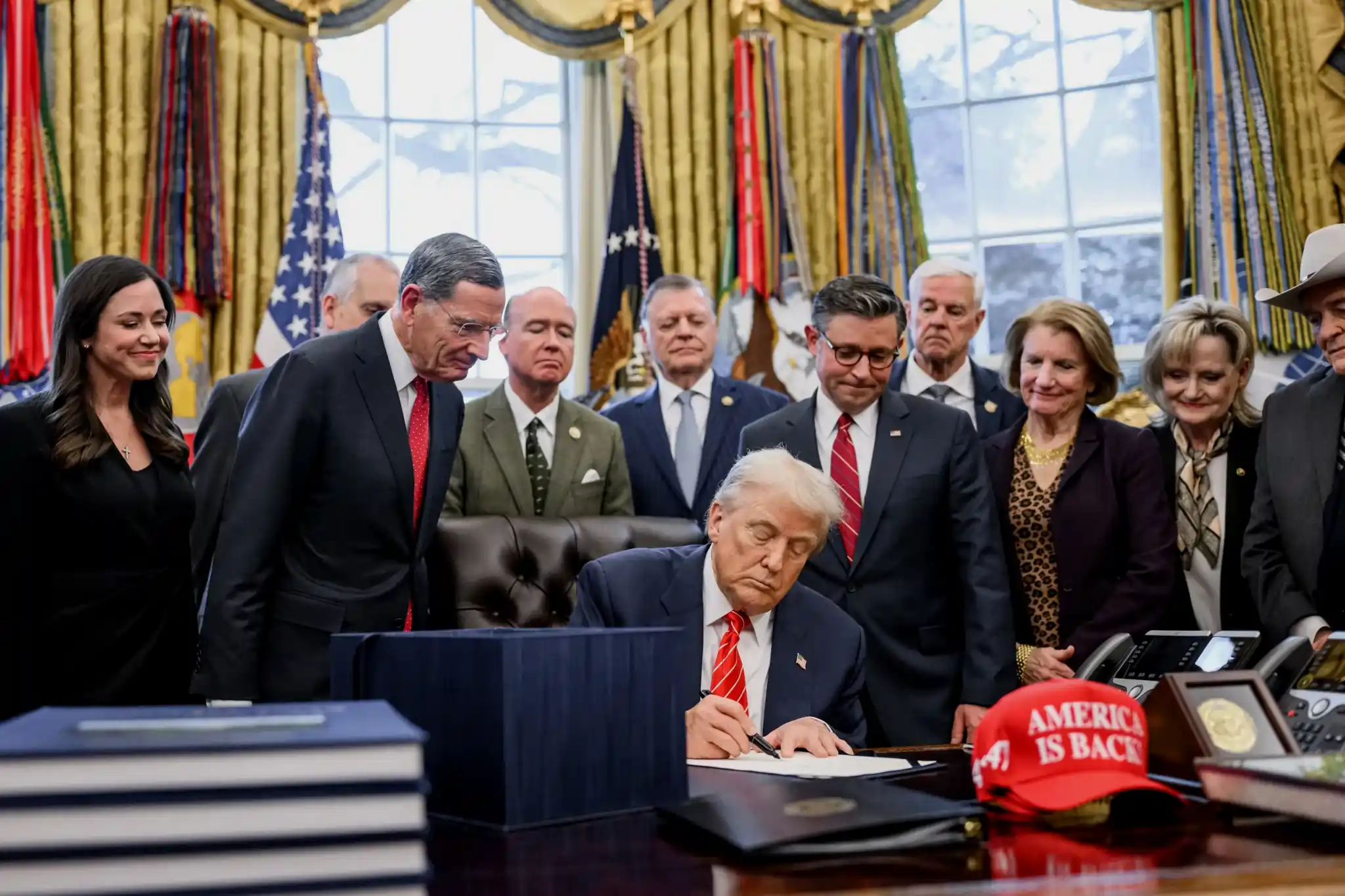
President Donald Trump signed a $1.2 trillion government funding bill on Tuesday, officially ending the partial federal government shutdown that began over the weekend. While the move restores funding to most federal agencies, it also sets up what could be an even tougher political battle in the weeks ahead.
Trump acted quickly after the House of Representatives narrowly approved the measure in a 217–214 vote. The president praised the agreement, calling it a win for the country.
“This bill is a great victory for the American people,” Trump said shortly after signing it into law.
The legislation wraps up work on 11 of the 12 annual spending bills that keep federal agencies operating through September 30, the end of the fiscal year. Those bills cover everything from education and transportation to defense and veterans’ services.
Homeland Security Funding Left Unresolved
But one major piece was left unresolved: funding for the Department of Homeland Security.
At the insistence of Democrats, the bill funds Homeland Security for only two weeks, through February 13. That short-term extension reflects deep disagreements over immigration enforcement policies and sets the stage for another possible shutdown if lawmakers cannot reach a compromise.
The decision to limit Homeland Security funding comes after growing public outrage over the fatal shootings of Alex Pretti and Renee Good by federal officers in Minneapolis last month. Many Democrats are demanding stricter oversight and reforms to immigration enforcement agencies before they agree to provide full-year funding.
House Democratic Leader Hakeem Jeffries made it clear that his party is prepared to draw a hard line.
“We need dramatic change in order to make sure that ICE and other agencies within the Department of Homeland Security are conducting themselves like every other law enforcement organization in the country,” Jeffries said.
Political Showdown Ahead
He warned that Democrats will not support another temporary funding bill for Homeland Security unless significant changes are made—raising the possibility that the department could face another shutdown in just days.
Republican leaders, meanwhile, are urging both sides to find common ground. House Speaker Mike Johnson expressed optimism that a deal can be reached before the February deadline.
“This is no time to play games with that funding,” Johnson said. “We hope that they will operate in good faith over the next 10 days as we negotiate this.”
But Senate Majority Leader John Thune sounded far less confident. When asked about the chances of an agreement, he replied with a hint of sarcasm: “There’s always miracles, right?”
Details of the Funding Package
The funding bill that passed Tuesday was the result of delicate negotiations and included provisions meant to appeal to both parties.
Republicans celebrated the fact that Congress avoided passing a massive “omnibus” spending package—a single, sweeping bill that bundles multiple agencies together. GOP lawmakers have long argued that such bills encourage excessive government spending and limit transparency.
Democrats, on the other hand, were able to block some of Trump’s most aggressive proposed budget cuts and add language aimed at ensuring federal money is spent as Congress intended.
Still, getting the bill through the House was anything but easy. Johnson needed almost every Republican vote to pass the measure, and the final roll call was held open for nearly an hour as party leaders scrambled to secure support from a handful of holdouts.
In the end, 21 Republicans voted against the bill, while the same number of Democrats crossed party lines to support it.
A Shorter Shutdown This Time
Trump had stepped in a day earlier, urging Republicans to stay united. “There can be NO CHANGES at this time,” he wrote on social media, pressuring reluctant GOP lawmakers to fall in line.
This shutdown differed significantly from the much longer and more disruptive impasse last fall, which dragged on for a record 43 days and affected a far larger portion of the government.
That earlier fight centered on extending pandemic-era health care subsidies—something Democrats pushed for but ultimately failed to secure. Because Congress had already passed six of the 12 spending bills earlier this year, many essential programs such as nutrition assistance and national parks were never at risk this time around.
With Tuesday’s vote, roughly 96 percent of the federal government is now fully funded for the rest of the fiscal year.
“You might say that now that 96 percent of the government is funded, it’s just 4 percent what’s out there,” Johnson said. “But it’s a very important 4 percent.”
That final 4 percent—the Department of Homeland Security—could soon become the center of Washington’s next major political showdown.

Gilbert Vernon, a political correspondent and author, covering the U.S. Supreme Court, federal agencies, and government policy.